Concrete steps construction in Vacaville CA - steps that stay solid and even underfoot
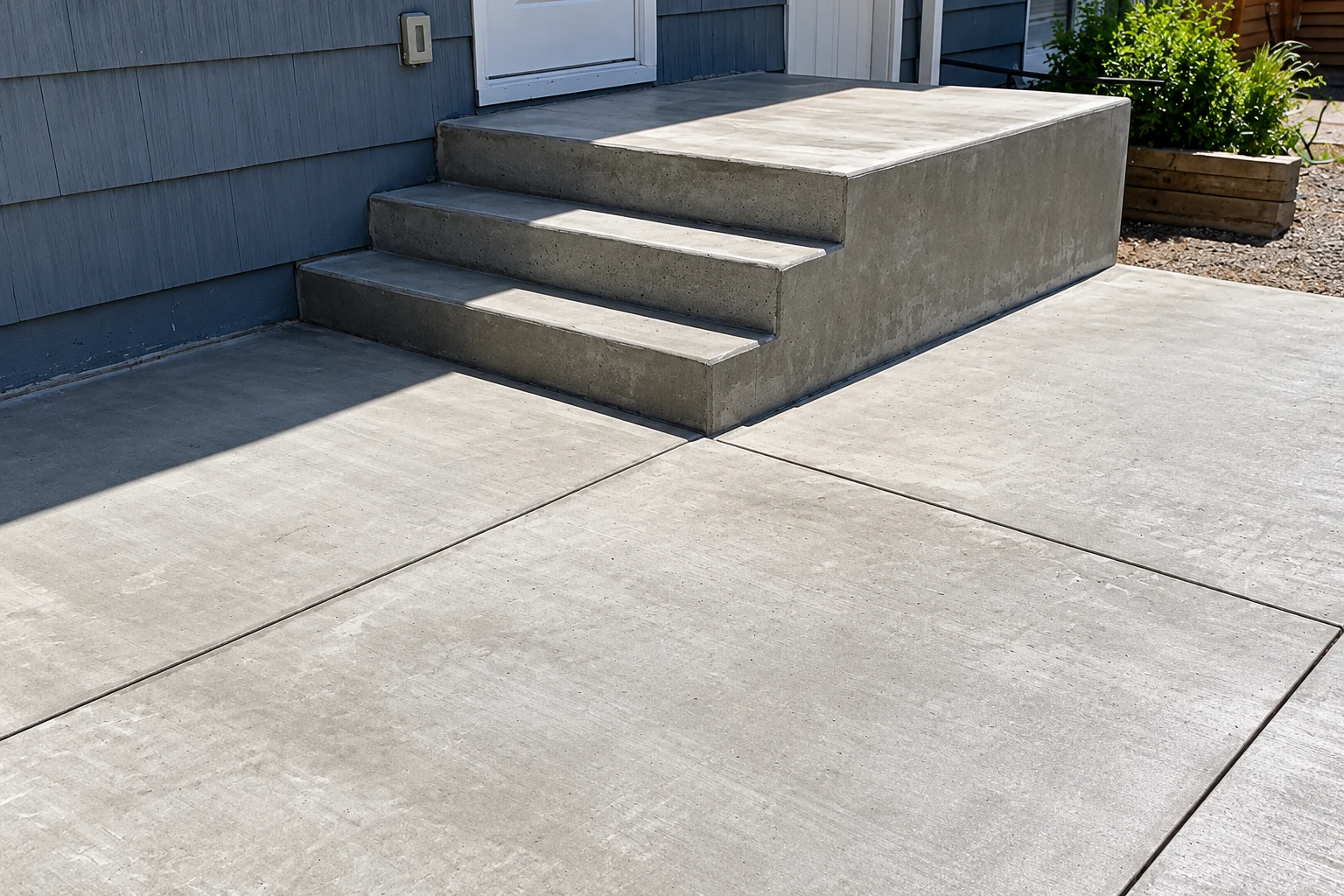
If the steps at your door are cracked, sinking or uneven, we rebuild them on a packed base with even risers and a slip-resistant finish.
- Fully licensed and insured.
- Free estimates at your property.
- We reply within 1 business day.
What does it take to build new concrete steps in Vacaville?
The short answer: Concrete steps construction in Vacaville, CA means tearing out worn steps and building new ones, either poured in place or set as precast units, so you have a solid, even way in and out of the house. Depending on the entry, the steps sit on the ground, tie into a porch landing or foundation, or span a slope as a stair.
Most people call when the steps at the front door have cracked, sunk or started pulling away from the porch, and they want to know what it'll cost and how long they'll be using the back door. The price turns mostly on how many steps you need, how wide they are, whether the old ones have to come out, what they tie into and what finish goes on the treads. The schedule turns on the tear-out, what the city wants for your address, the weather and the curing time new concrete needs before it can take your weight. I give you a written estimate after I've seen the steps, and it spells out what's included.
How do you know your concrete steps need replacing?
A gap at the porch
If a gap is opening where the steps meet the porch or the house, the steps have usually settled or were never tied in. Water runs into that gap and softens the ground under them, so the gap keeps widening and the top step turns into a trip edge.
Cracked treads and chipped edges
Cracks across the treads and edges breaking off the front of each step often trace back to a weak base or a soft top finish. Once water gets into the cracks, more pieces come loose, and a broken edge is right where people catch a heel.
One step taller than the rest
When one riser, the upright face of a step, is noticeably taller or shorter than the others, the steps have sunk unevenly or were laid out wrong from the start. Your feet expect every step to match, so the odd one is the one people trip on, and sinking steps usually keep going.
How we build concrete steps
First we break out the old steps and haul them off, and then, before a single form goes up, I lay out the whole rise from the door down to the walk, because a small mistake on one step carries down to every step below it. Next we dig out to firm ground and pack a solid base, not loose fill, since steps sitting on fill settle right along with it. Where the steps need it, we set rebar, steel bars that hold the concrete together if it cracks, and tie the steps into the landing or foundation they meet. Then we pour, finish the treads so your feet can grip them, and keep every exposed face and edge damp and covered while it cures and gains strength, with the edges protected from knocks while they're young. If the budget's tight, a plain finish is where I'd cut, not the base, because nobody sees the base on pour day but you'll see it in every crack later if it was skimped.
Steps rarely stand alone. When they climb to a new porch, addition or shed, the slab they meet comes first through our slab foundation building work, and when they rest against a new structure, we build that through foundation installation and plan the tie-in from the start.
Steps that sit on the ground
These suit a short run of a few steps from a door down to a walk or patio. They rest on a dug-out, packed base, so how well that base is built decides how long they stay level.
Steps tied to a porch or landing
These suit steps that meet a porch slab or a foundation wall. We connect them so the steps and the porch move together instead of pulling apart over time.
Stairs that span a slope
These suit a taller rise down a yard slope, where a solid block would take a lot of concrete. The stair is carried on supports at the top and bottom with steel running through it, so the layout and reinforcement take more planning.
What happens when you call about concrete steps in Vacaville?
Here's how a steps job runs with us, from your first call to the walk-through on the finished steps. I'm part of every stage, and you'll know the price before any work starts.
- Step 01
Call or send a request
Call (707) 898-1384 or use our contact form and tell us a little about the steps you have now. We get back to you to set a time for me to come out to the house.
- Step 02
I look at the steps myself
I check the entry, the ground, what the steps tie into and what they have to carry, from daily foot traffic to a loaded dolly. You get a written estimate that spells out what's included, so you know exactly what you're paying for before we start.
- Step 03
We prep, form and pour
If you go ahead, we sort out what the city wants for your address, then prep the ground, set the forms, plan the joints and pour. The entry is out of use from tear-out until the new steps have cured, so plan another way in for that stretch.
- Step 04
We walk the finished steps
Once the concrete has cured, I walk the finished steps with you so you can see what you paid for. I'll answer any questions about caring for them while you're standing on them.
Concrete steps construction in Vacaville and the clay underneath
The City of Vacaville's Building Division reviews and inspects all new construction and improvements to existing structures inside city limits, and the city also lists encroachment permits for work in the public right-of-way, the city's strip along the street, which matters if your steps come down to the sidewalk. I won't guess on whether your steps need a permit. We find out what the city or the county wants for the work at your address, and when a permit is needed we pull it, keep the papers on site and meet the inspector.
One soil data site rates Solano County's exposure to expansive clay as extreme, and that clay swells as it soaks up water and shrinks as it dries, which can crack slabs and footings. That's why the base is where I spend the most care on steps here, and why sending water away from them matters as much as the concrete. We build steps the same way on jobs in Fairfield and Dixon.
Get a written estimate for new concrete steps
We reply within one business day to set a time, and I come out to look at your steps myself. The estimate is free, done at your property, and comes with no obligation.
Why Vacaville homeowners call Custom Vacaville Concrete Company
I measure your steps myself
I come out to look at the job myself, and my crew does the digging, forming, pouring and finishing with me running the work. The person who measured your rise is the one on site making sure it gets built that way.
Running concrete jobs since 2013
I started this business in 2013 after years of summers on concrete crews, starting with the shovel work most people never see. Thirteen years in, I still care more about what's under a set of steps than how they look on pour day.
Licensed and insured in California
We're fully licensed and insured. California requires anyone contracting work worth $1,000 or more in labor and materials to hold a current license from the Contractors State License Board, and the board's small-job exception doesn't cover work that needs a permit, so check whoever you hire.
If your steps have started to move, the sooner I see what's under them, the better. Contact us to set up a visit.
Concrete steps questions we hear in Vacaville
How much do concrete steps cost in Vacaville?
Poured concrete steps across the US usually cost about $200 to $500 per step installed. That's a national figure, not our price, and where your job lands depends on how many steps you need, how wide they are, whether old steps come out and what they tie into. You'll get a written price after I've seen the site.
Should I choose poured or precast concrete steps?
One consumer guide suggests poured steps for custom widths, attached porches or decorative finishes, and precast for a standard replacement of 2 to 4 steps on a tight budget. So the shape of your entry and your budget usually decide it. I'll tell you which one fits when I'm standing at your door.
How long do concrete steps last?
One consumer guide puts the life of concrete steps at 30 to 50 years with proper footings and air-entrained concrete, a mix with tiny air bubbles that help it stand up to weather. Since the guide ties that lifespan to both, ask any contractor you talk to what goes under the steps and what mix they're ordering.
What causes concrete steps to crack or pull away from the house?
Concrete steps usually crack or pull away because of what's under them, not the concrete itself. One guide says even decorative steps need more under them than uncompacted fill, and steps on loose dirt settle as it does, more so in the swelling clay around here. That's why the base belongs in any quote you get for steps.
How do I keep outdoor concrete steps from getting slippery?
Ask for a textured finish on the treads, because a smooth or polished surface turns slick when it's wet. A broom finish, made by dragging a stiff broom across the fresh concrete, leaves fine ridges your shoes can grab. It's the plain choice, and on steps it's usually the right one.
Can old concrete steps be repaired instead of replaced?
Sometimes, but steps that have sunk, tilted or pulled away from the house usually need to come out. A patch covers the surface while the problem underneath keeps moving, so I'll tell you straight if patching isn't worth your money.
Foundation work that connects to your steps
Slab foundation building
If your new steps lead up to a new porch, addition or shed, the slab they meet has to be built level and solid first.
Foundation installation
Building an addition or a new structure means the foundation sets the height your steps climb to, so getting it right helps keep the risers even.
Get your concrete steps measured and priced
Have the number of steps, the width and a photo of your entry handy when you call (707) 898-1384 or use the form, so I know what I'm walking up to.